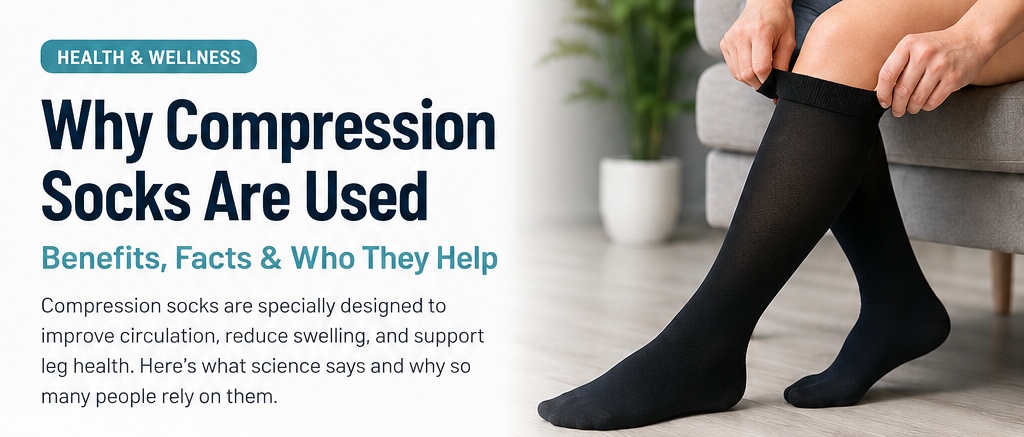
Compression socks are specially designed elastic garments that apply gentle pressure to your legs, ankles, and feet. Their main purpose is to improve blood circulation, reduce swelling, and support vein health. These socks are commonly used by athletes, travelers, pregnant women, office workers, and people with medical conditions affecting blood flow.
Doctors and healthcare professionals often recommend compression socks because poor circulation in the legs can lead to discomfort, fatigue, swelling, and even serious complications like blood clots.
What Are Compression Socks?
Compression socks are tight-fitting socks made with elastic materials that create graduated pressure on the legs. The pressure is usually strongest at the ankle and gradually decreases toward the calf or thigh.
This design helps blood move upward toward the heart more efficiently instead of pooling in the lower legs.
There are different types of compression socks available:
- Mild compression (8–15 mmHg)
- Moderate compression (15–20 mmHg)
- Firm compression (20–30 mmHg)
- Medical-grade compression (30–40 mmHg and higher)
The level of compression depends on the individual’s health needs and doctor recommendations.
Why Compression Socks Are Used
1. Improve Blood Circulation
One of the biggest reasons people wear compression socks is to improve blood flow. Veins in the legs work against gravity to push blood back to the heart. When circulation becomes weak, blood can collect in the lower legs.
Compression socks gently squeeze the legs, helping veins move blood more efficiently.
Better circulation may help:
- Reduce leg fatigue
- Prevent blood pooling
- Improve oxygen delivery
- Reduce discomfort during long standing or sitting
2. Reduce Swelling in Legs and Feet
Swelling, also called edema, commonly occurs after standing for long hours, pregnancy, travel, or medical conditions.
Compression socks help reduce fluid buildup by supporting healthy circulation and preventing excess fluid from collecting in tissues.
People who often benefit include:
- Nurses
- Retail workers
- Drivers
- Office employees
- Pregnant women
- Frequent travelers
3. Help Prevent Varicose Veins
Varicose veins are enlarged, twisted veins that usually appear on the legs due to weakened vein valves.
Compression socks can:
- Reduce pressure inside veins
- Improve vein function
- Minimize discomfort
- Slow the progression of varicose veins
They are commonly recommended for individuals with chronic venous insufficiency.
4. Lower the Risk of Blood Clots
Long periods of immobility can increase the risk of deep vein thrombosis (DVT), a dangerous blood clot that forms in deep veins.
Compression socks are often advised during:
- Long flights
- Surgery recovery
- Bed rest
- Hospital stays
Research published by medical organizations such as the Mayo Clinic and the Cleveland Clinic shows that compression therapy can help reduce DVT risk in certain individuals.
5. Support Athletic Performance and Recovery
Athletes frequently wear compression socks during workouts and recovery sessions.
Some studies suggest compression wear may help:
- Reduce muscle soreness
- Improve recovery time
- Decrease muscle vibration
- Enhance comfort during endurance activities
However, experts note that performance benefits vary from person to person, and more research is still ongoing.
6. Help During Pregnancy
Pregnancy often causes swelling and increased pressure on leg veins because of hormonal changes and increased blood volume.
Compression socks may help pregnant women:
- Reduce ankle swelling
- Ease leg discomfort
- Improve circulation
- Lower the risk of varicose veins
Doctors often recommend them during the second and third trimesters.
Who Should Use Compression Socks?
Compression socks may benefit:
- People who stand all day
- Office workers sitting for long hours
- Travelers on long flights
- Pregnant women
- Athletes and runners
- Elderly individuals
- People with diabetes (with doctor approval)
- Patients recovering from surgery
- Individuals with vein disorders
When Should You Avoid Compression Socks?
Compression socks are not suitable for everyone.
People with the following conditions should consult a doctor first:
- Severe peripheral artery disease
- Certain skin infections
- Severe heart conditions
- Advanced nerve disorders
- Severe diabetes complications
Improperly fitted compression socks can sometimes cause discomfort or circulation issues.
How to Choose the Right Compression Socks
Before buying compression socks, consider:
Compression Level
Choose based on your needs and doctor recommendations.
Length
Available options include:
- Ankle-length
- Knee-high
- Thigh-high
Material
Breathable and moisture-wicking materials improve comfort.
Proper Fit
Correct sizing is important. Socks that are too tight or loose may not work effectively.
Scientific Evidence Behind Compression Socks
Medical studies support the effectiveness of compression therapy for improving venous circulation and reducing swelling.
According to health experts:
- Graduated compression helps veins return blood efficiently
- Compression therapy can reduce symptoms of venous disease
- Medical-grade compression is widely used in hospitals and recovery care
Organizations such as the National Health Service and American Heart Association also recognize the role of compression therapy in supporting circulation and vein health.