
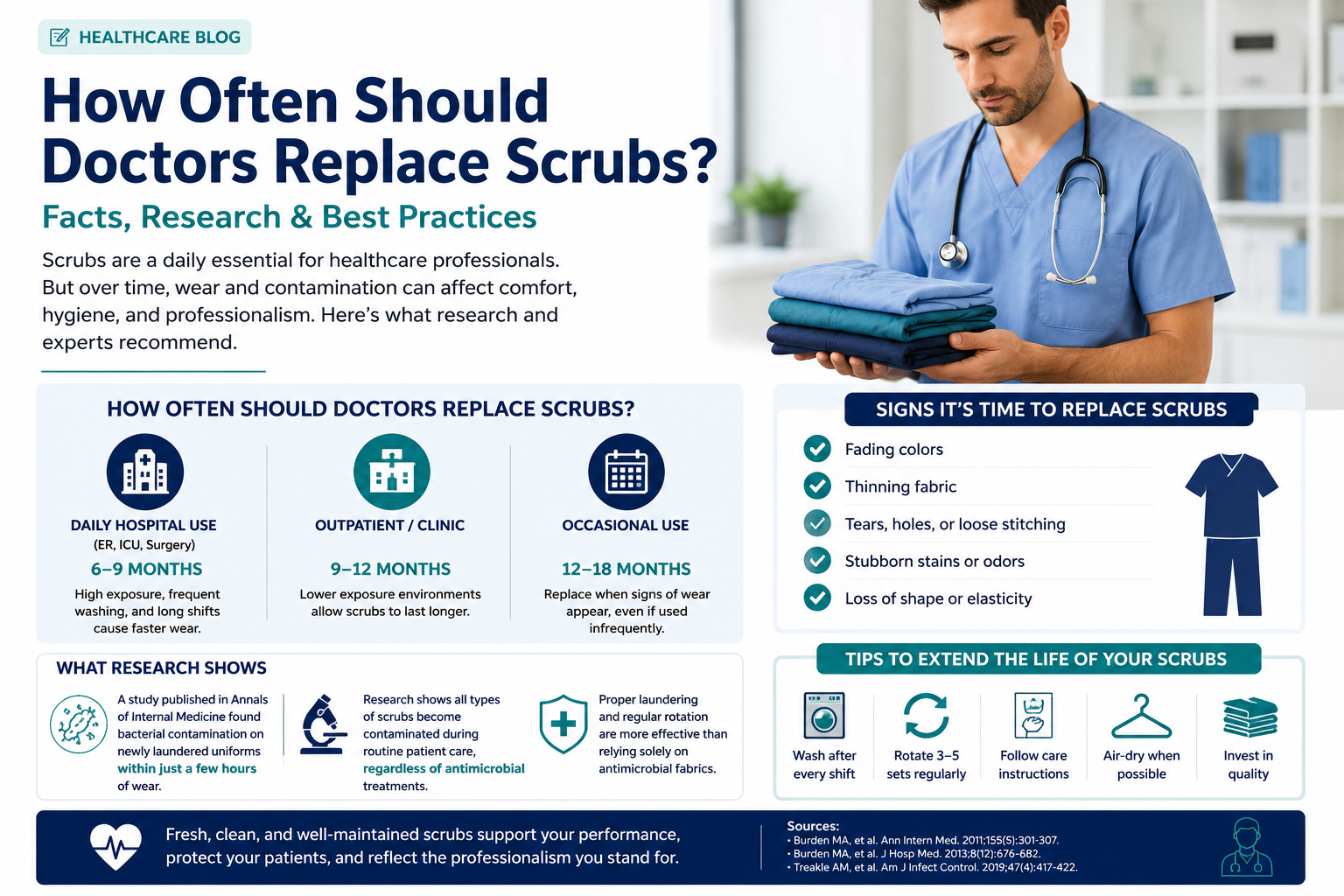
Medical scrubs are more than just uniforms—they are an essential part of infection control, professional appearance, and comfort for healthcare professionals. Yet one question continues to surface among doctors, nurses, and healthcare administrators:
How often should doctors replace their scrubs?
While there is no universal rule that mandates an exact replacement schedule, scientific studies and healthcare best practices provide clear guidance on when scrubs should be washed, rotated, and ultimately replaced.
The Short Answer
Most doctors should replace their scrubs every 6 to 12 months, depending on:
- How frequently they wear them
- The number of scrub sets they own
- The intensity of their work environment
- The quality of the fabric
- Their laundering practices
Healthcare workers in high-exposure environments such as emergency departments, intensive care units, and operating rooms may need to replace scrubs more frequently than those working in outpatient clinics.
Why Scrub Replacement Matters
Scrubs serve several important purposes:
- Help maintain a professional appearance
- Provide comfort during long shifts
- Reduce the risk of carrying contaminants
- Support workplace hygiene standards
Over time, repeated washing and daily wear degrade the fabric, reducing durability and making scrubs more difficult to clean effectively.
What Research Says About Scrub Contamination
Scientific evidence shows that healthcare attire becomes contaminated surprisingly quickly.
A randomized controlled trial published in the Annals of Internal Medicine found that newly laundered physician uniforms accumulated bacterial contamination within just a few hours of wear. Researchers reported that contamination levels after three hours reached nearly half of those measured after an eight-hour shift.
The study concluded that:
“Bacterial contamination occurs within hours after donning newly laundered uniforms.”
This finding reinforces why healthcare professionals should wear a fresh set of scrubs for every shift.
Another study involving 105 healthcare workers found that all scrub types became contaminated during routine patient care, regardless of whether they contained antimicrobial treatments. Researchers observed no significant reduction in bacterial contamination from antimicrobial scrubs compared with standard scrubs.
These findings suggest that proper laundering and regular replacement are more important than relying solely on antimicrobial fabrics.
How Often Should Doctors Replace Scrubs?
Daily Hospital Use
Doctors working in hospitals, emergency rooms, and inpatient settings should consider replacing frequently used scrub sets every:
6–9 months
Frequent exposure to patients, repeated washing, and long shifts accelerate fabric deterioration.
Outpatient and Clinic Settings
Physicians in clinics or practices with lower contamination exposure can generally replace scrubs every:
9–12 months
Since scrubs undergo less intensive use, they often maintain their quality for a longer period.
Occasional Use
Healthcare workers who wear scrubs only periodically may keep them for:
12–18 months
However, replacement should still depend on the garment’s condition rather than age alone.
Signs It’s Time to Replace Your Scrubs
Even if you haven’t reached the suggested timeline, your scrubs may need replacing if you notice:
- Fading colours
- Thinning fabric
- Tears or holes
- Loose seams or stitching
- Stretched waistbands
- Persistent stains
- Lingering odours after washing
- Loss of shape or fit
Worn-out scrubs can compromise both appearance and comfort during demanding shifts.
How Many Pairs of Scrubs Should Doctors Own?
Experts commonly recommend owning:
3–5 pairs for part-time schedules
or
5–7 pairs for full-time healthcare professionals.
Having multiple sets allows proper rotation and reduces excessive wear on individual garments.
Doctors working consecutive shifts often benefit from maintaining a larger scrub collection.
Best Practices for Washing Scrubs
Proper laundering can significantly extend scrub lifespan while promoting hygiene.
Healthcare professionals should:
- Wash scrubs after every shift.
- Separate scrubs from regular household clothing whenever possible.
- Follow manufacturer care instructions.
- Use appropriate water temperatures according to fabric guidelines.
- Dry thoroughly before storage.
- Replace heavily contaminated scrubs promptly.
Routine washing not only supports infection prevention but also preserves fabric integrity.
Are Antimicrobial Scrubs Worth It?
Manufacturers increasingly market antimicrobial scrubs as a safer alternative.
However, research has produced mixed findings.
Clinical trials have found that antimicrobial scrubs do not consistently demonstrate lower bacterial contamination than standard scrubs in real-world healthcare settings.
Therefore, regardless of scrub type, healthcare professionals should continue practicing:
- Daily laundering
- Regular rotation
- Timely replacement
These habits remain the most effective strategies.
The Cost of Delaying Replacement
Keeping scrubs beyond their useful lifespan may result in:
- Reduced comfort during long shifts
- A less professional appearance
- Increased susceptibility to tears
- Difficulty removing stains and odours
- Lower confidence among healthcare staff


Comment (1)
[…] of your scrubs, but even the best garments eventually show signs of wear. Explore our blog on How Often Should Doctors Replace Scrubs? to learn when it’s time to replace your nursing uniforms while maintaining comfort, hygiene, […]